
Joenit Music at the heart of electronics
Joenit Rega Operated by Joenit

Rega

The history behind the brand

Rega has built turntables in Southend-on-Sea, England, since 1973, and Joenit has carried them into the Benelux since 1993 — the longest partnership in the house. What keeps Joenit loyal is a conviction the two companies happen to share: a record player is a measuring instrument, and every gram of mass that does not earn its place is mass that blurs the music. Rega chase performance, not features — a light but rigid plinth, a hand-built tonearm with no play in its bearings, a cartridge made a few doors down from the arm it sits in. Nothing on a Rega is there to photograph well. After thirty years of setting them up, listening to them and living with them, Joenit still reaches for one to hear what is actually cut into a groove.

Chapter 01

An engineer who could not buy what he wanted

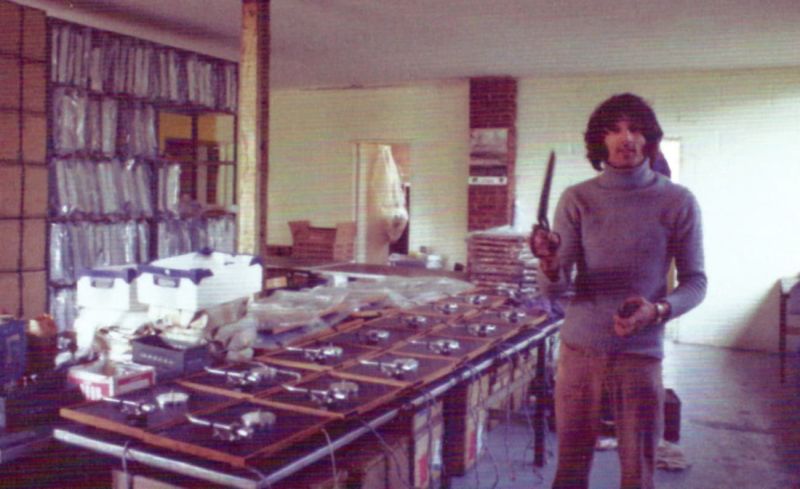
Roy Gandy did not set out to build turntables. He set out to fix things. A broken toy he could not mend as a child, a bicycle he had to keep running to get to school, motorcycles rebuilt from salvaged parts, guitars cut from scrap wood, a rally car assembled to national competition standard - all of it for the same reason: he could not afford to buy the quality he wanted, so he learned to make it. By the time he was working as an engineer at Ford, that habit had hardened into something more useful than talent. He called it the instinct to recognise when something is wrong, and the impatience to go and find what is right.

Record players were wrong. The best deck of the day carried an arm that offended everything his engineering sense had taught him. A more expensive rival hummed with motor noise. A cheap kit deck, on paper the worst of the three, sounded better than either - and no reviewer seemed willing to ask why. In 1973, in Essex, he stopped asking and started building. The first Rega turntable was called the Planet.

An engineer who could not buy what he wanted

Chapter 02

A record player is a measuring instrument

Everything Rega has done since follows from one idea: a turntable does not make music, it measures a groove. Anything that moves when it should not - a flexing plinth, a resonating platter, a bearing with play in it - is the instrument lying to you. So Rega builds against movement. Light where lightness raises the resonant frequency out of harm's way, rigid where rigidity refuses to bend, and obsessive about the tolerances in between.

That is why a Rega deck looks almost plain next to its rivals. There is no suspension to admire, no isolation platform, no mass for the sake of mass. The Planar 3 of 1976 already had the shape the range still has fifty years later, and the Naiad of 2017 - the no-limits machine Rega built to see how far the idea goes - is recognisably the same argument, taken to the end of its own logic. Every model between them sits somewhere on that line, which is why choosing a Rega is never a question of taste. It is a question of how far along the line you want to stand.

A record player is a measuring instrument

Chapter 03

The tonearm that moved the goalposts

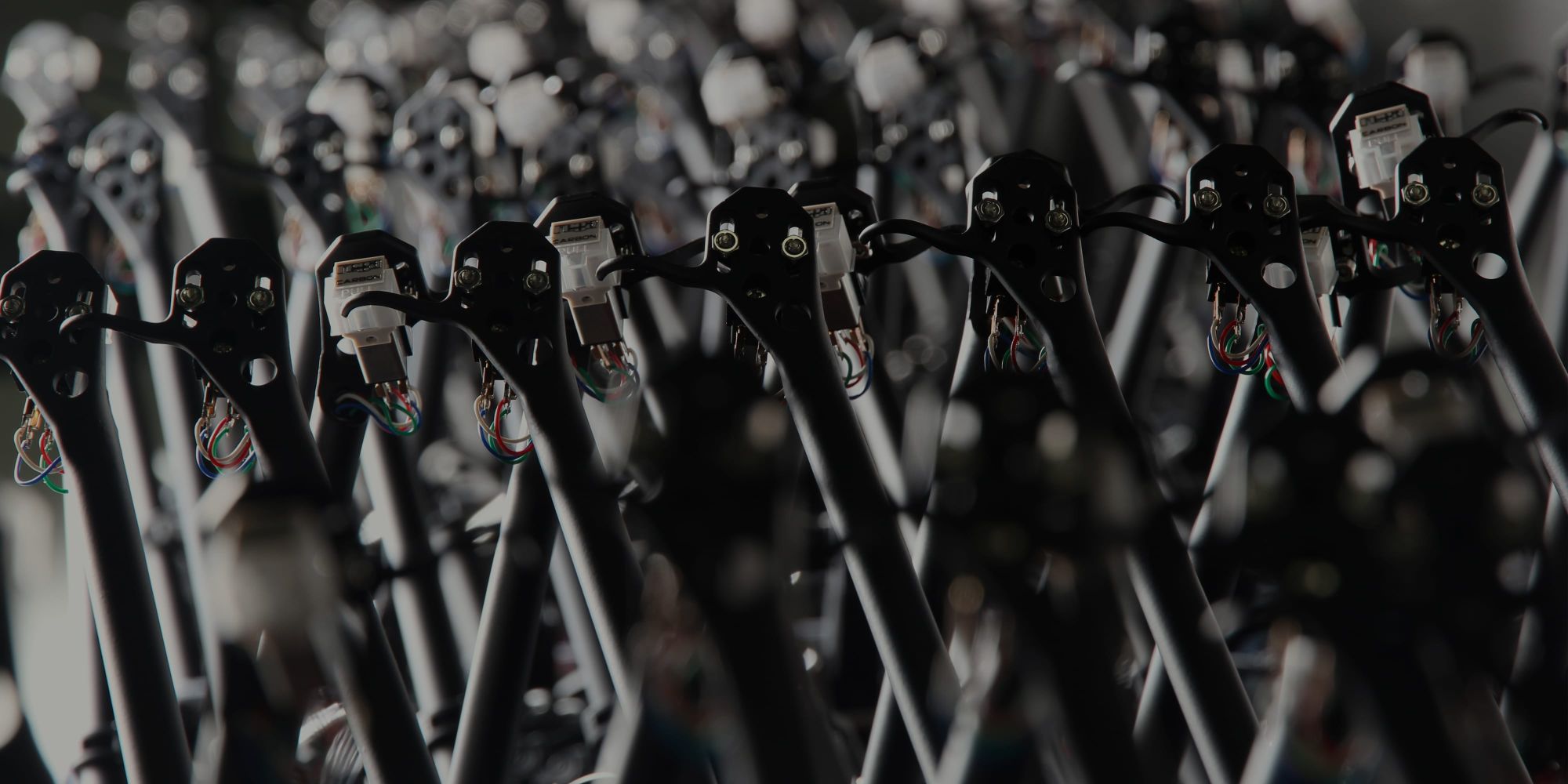
In 1983 Rega released the RB300, and the hi-fi trade quietly recalculated what a good tonearm was allowed to cost. It was a one-piece casting, made to tolerances the price had no business buying, and it was better than arms costing several times more. The RB250 followed a year later. Rival turntable manufacturers began fitting Rega arms to their own decks - the sincerest compliment engineering ever receives.

Rega has been redrawing that same line ever since, and not only on arms. Moving magnet cartridges with hand-wound coils and patented neodymium magnet assemblies. Moving coil cartridges assembled under a microscope, three days of work in each one. Amplifiers, phono stages, CD players and loudspeakers, all built to the standard the arms set. The company backs the lot with a lifetime warranty against manufacturing defects, which is a confident thing to write down and an expensive thing to mean.

The tonearm that moved the goalposts

Chapter 04

1993 - the year Rega arrived in the Benelux

Joenit began importing Rega in 1993. The company was five years old, Rega was twenty, and the brand was almost unknown here: a British make with a stubborn reputation and no shelf in a Belgian shop. What settled it was not a sales pitch. It was listening to a Planar 3 next to decks costing three times as much and having to admit, out loud and slightly annoyed, that the cheap one was right.

More than thirty years later Joenit is still the exclusive importer for the Benelux, and Rega is the longest partnership in the house. Long enough to have sold every generation of the Planar, watched the RB arms evolve number by number, and learned the range the only way it can properly be learned - by living with it. It also means that when someone asks whether a Planar 6 is worth the step up from a Planar 3, the answer does not come from a brochure.

1993 - the year Rega arrived in the Benelux

Chapter 05

Seventy thousand square feet, and still built by hand

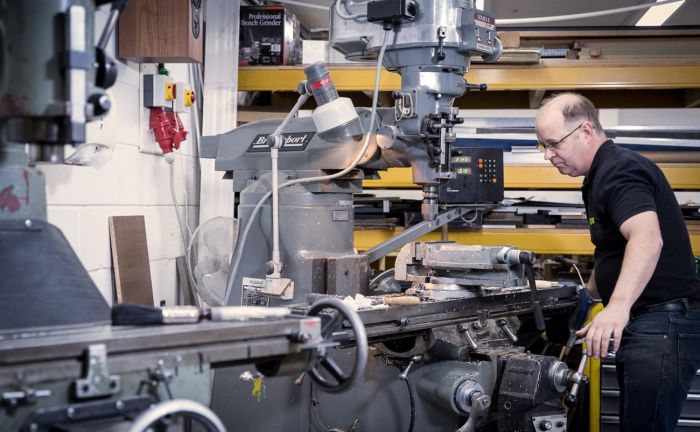
Rega has never moved production offshore, and shows no sign of wanting to. The company works from a single industrial estate in the south-east of England, across several purpose-built units totalling nearly 70,000 square feet, with more than 150 people assembling somewhere around 8,500 products a month by hand.

Walk through it and the scale of the handwork is the surprise. A team of eight building Planar 1 decks and RB110 arms, working to a daily count. Assembly jigs designed in-house so that every Planar 3 leaves identical to the last. Cartridge coils wound by hand. Reference electronics built start to finish by one technician, casework machined from solid aluminium. A wiring department with more than two hundred thousand pounds of automated equipment feeding benches where people still do the fine work. And an engineering department that Rega itself calls the beating heart of the company - the people who build the jigs and tooling that let everyone else be accurate. The products go out to more than fifty countries. Joenit handles three of them.

Seventy thousand square feet, and still built by hand

Chapter 06

From a standing start to one of the largest Rega territories in the world

Joenit began in 1993 with no customers and a brand nobody had heard of. Today, from one of the smallest territories on Rega's map, the company moves roughly half the volume of Germany, more than sixty percent of France's, and around thirty percent of that of the United States - Rega's longest-standing distributor, and its fourth largest anywhere.

That is here not as a boast but because it is the whole argument of this page. Those numbers did not come from a bigger market - the Benelux is a fraction of the size. They came from a way of selling: dealers who are trained and stocked rather than merely supplied, demonstrations that let the product do the talking, service that survives the sale, and thirty years of not switching to whatever happened to be fashionable. A manufacturer this good deserves to be explained properly. That is what Joenit is for - and after thirty years, we still enjoy doing it.

From a standing start to one of the largest Rega territories in the world

Milestones

1973

Roy Gandy founds Rega in Essex. The first turntable is the Planet.

1976

The Planar 3 arrives and sets the shape of the range for the next fifty years.

1983

The RB300 tonearm redefines what a good arm costs.

1988

Joenit is founded in Mechelen.

1993

Joenit becomes Rega's exclusive importer for the Benelux.

1995

The Planar 9 takes the engineering to its reference limit.

2016

Planar 1, 2 and 3 are reborn as the modern P-series.

2017

The Naiad - a no-limits turntable built to prove the philosophy.

2023

Rega turns fifty and launches the Naia, its new flagship.

2026

Rega exports to more than fifty countries. Joenit looks after three of them.

Joenit

And since 1993, in European living rooms.

That is the whole reason this site exists: a brand worth explaining, and a listener worth explaining it to. Explore the range, or find the dealer nearest you.

Amplifiers · Cartridges · Phono Amplifiers · Loudspeakers · Turntables · Tonearms · Accessories · Systems